
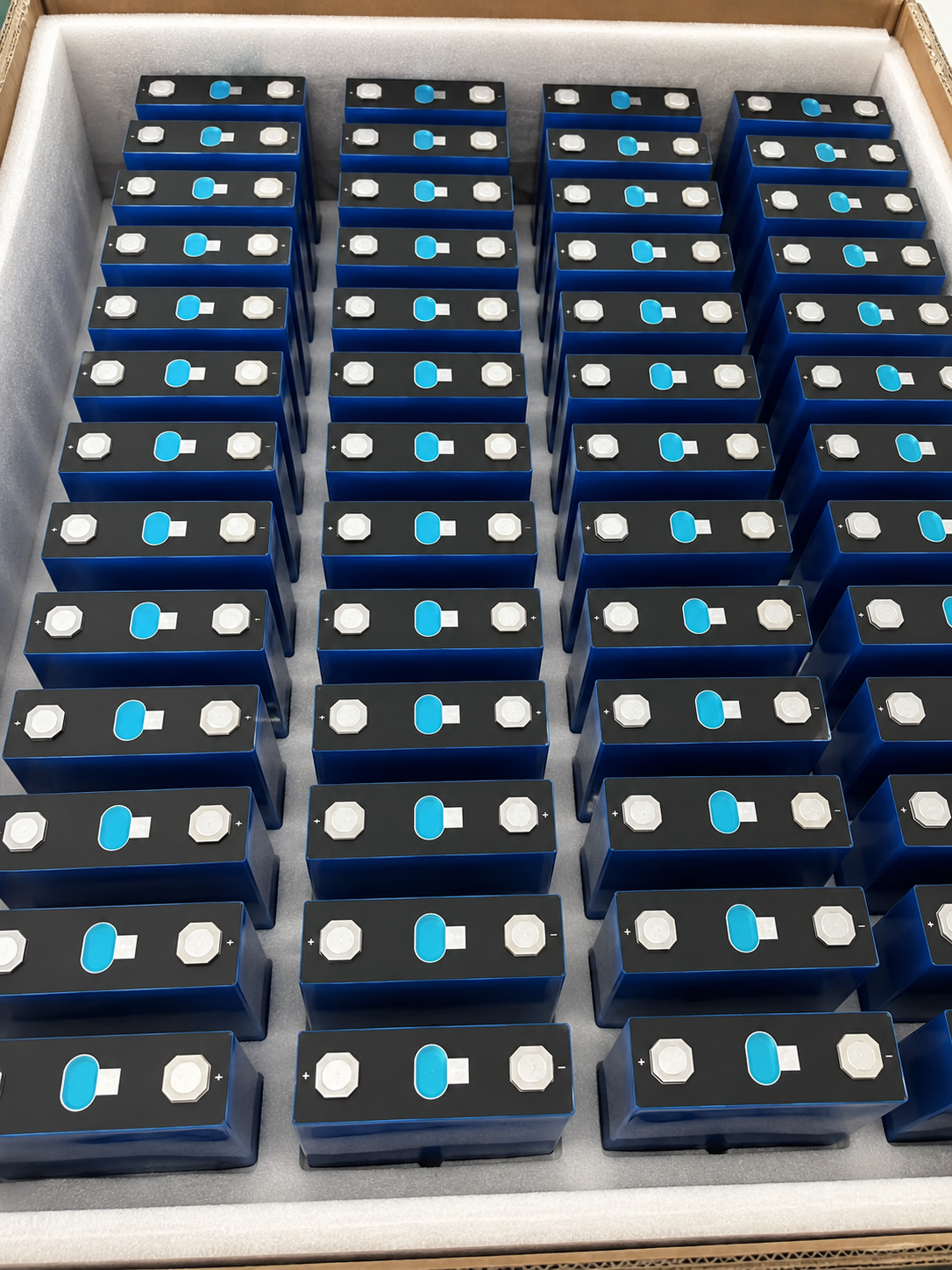
A LiFePO4 battery is a lithium-ion battery that uses lithium iron phosphate as its cathode material. It is valued for long cycle life, strong thermal stability, and steady power delivery, which is why you see it in solar storage, RVs, marine systems, backup power, and other high-use applications.
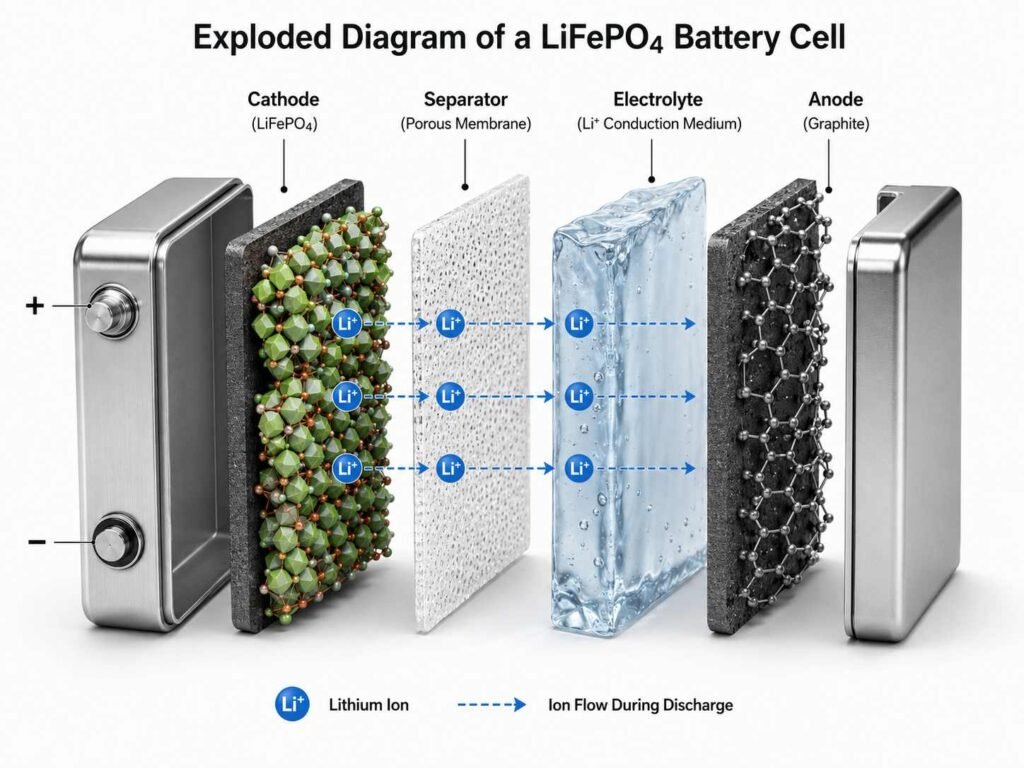
What LiFePO4 Means
LiFePO4 stands for lithium iron phosphate. The name comes from the chemistry inside the cell.
This chemistry is different from other lithium batteries that use nickel- or cobalt-based cathodes. That difference changes the battery’s behavior. In general, LiFePO4 batteries are known for:
- better thermal stability,
- longer service life,
- a flatter discharge curve,
- and better tolerance for deep cycling.
They usually trade some energy density for that stability. In plain terms: they may be a little larger or heavier than some other lithium options, but they often last longer and run cooler.
How a LiFePO4 Battery Works
Like other lithium-ion batteries, a LiFePO4 battery works by moving lithium ions between the anode and cathode during charge and discharge. When the battery charges, ions move one way; when it discharges, they move back and release usable electrical energy.
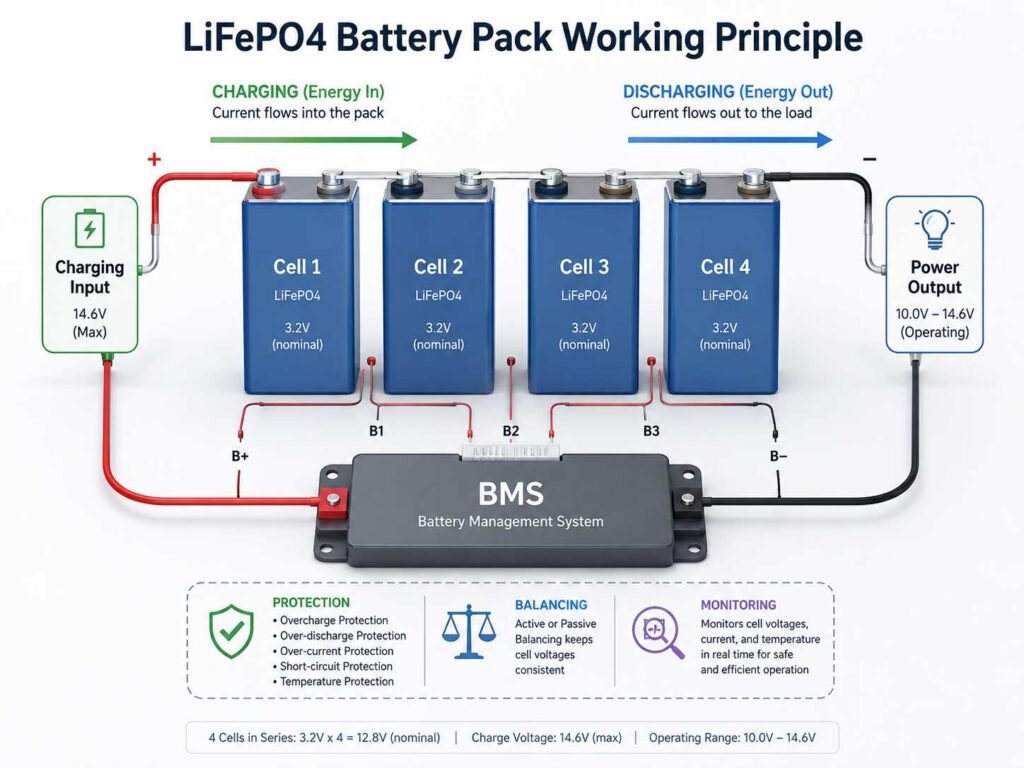
A single LiFePO4 cell has a nominal voltage of about 3.2V. Many common battery packs combine cells in series to create familiar system voltages such as 12.8V, 25.6V, or 51.2V.
In a finished pack, the cells are usually paired with a battery management system, or BMS. The BMS helps protect the pack from overcharge, over-discharge, overcurrent, and cell imbalance. For most buyers, the BMS is not optional. It is part of what makes the battery practical and safe to use.
LiFePO4 vs Other Lithium Batteries
LiFePO4 is one type of lithium-ion battery, but not every lithium-ion battery is LiFePO4.
A simple comparison looks like this:
- LiFePO4 vs generic lithium-ion: LiFePO4 is a subtype within the broader lithium-ion family.
- LiFePO4 vs lead-acid: LiFePO4 is lighter, lasts longer in deep-cycle use, and offers more usable capacity.
- LiFePO4 vs NMC or NCA lithium batteries: LiFePO4 usually has better safety and cycle life, while other chemistries often have higher energy density.
That is why LiFePO4 is often the better fit for stationary energy storage and repeated daily cycling, while other chemistries may be chosen when maximum energy density matters most.
Common Types of LiFePO4 Batteries
You will usually see LiFePO4 batteries in a few formats:
- Prismatic cells: common in larger packs and energy storage systems
- Cylindrical cells: often used where modular construction matters
- Pouch cells: slimmer, lighter packaging for some applications
- Drop-in replacement batteries: made to replace lead-acid batteries in existing systems
- Custom battery packs: built for a specific voltage, capacity, enclosure, or use case
Many buyers are not really looking for the cell format itself. They are looking for the finished pack: the voltage, capacity, terminals, BMS, and charging compatibility that match the application.
Where LiFePO4 Batteries Are Used
LiFePO4 batteries are especially common where the battery gets used hard and recharged often.
Typical applications include:
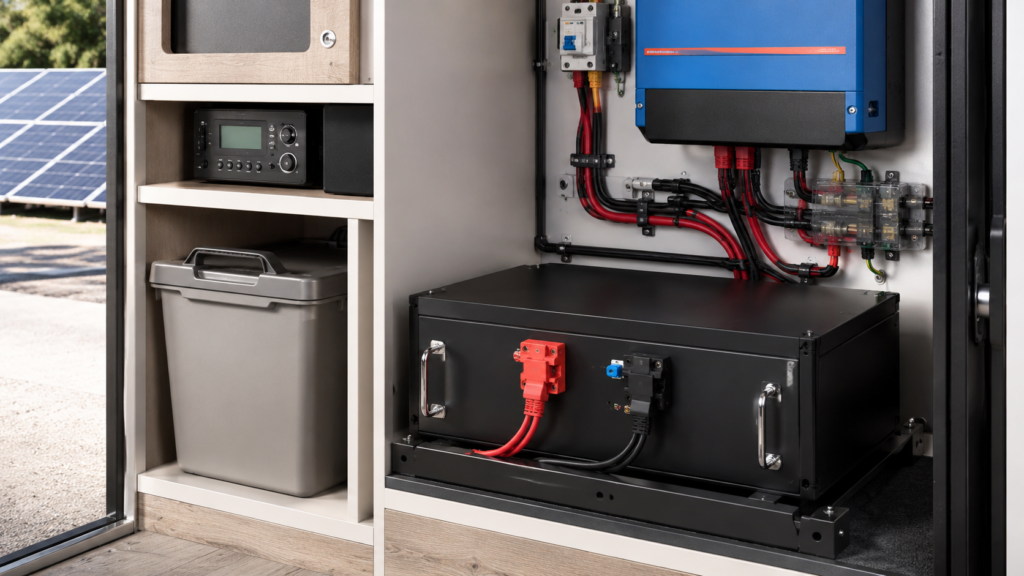
- solar and off-grid storage
- RV and camper power systems
- marine batteries
- home backup power
- telecom and industrial backup
- portable power stations
- electric mobility and light EV systems
- custom OEM battery packs
Why Buyers Choose LiFePO4
The main reasons are practical:
- long cycle life
- safer chemistry profile
- deep usable capacity
- stable voltage during discharge
- low maintenance
- good fit for repeated daily cycling
For many buyers, the biggest advantage is not one spec. It is the total system behavior over time. A LiFePO4 battery tends to stay predictable, which is useful in real-world power systems.
What to Keep in Mind
LiFePO4 is not perfect for every job.
The main limitations are:
- lower energy density than some other lithium chemistries
- reduced charging performance in very cold conditions
- higher upfront cost than many lead-acid options
- need for the right charger and BMS setup
That means the right battery is not just about chemistry. It is also about system design. Voltage, charge profile, current demand, temperature range, and physical size all matter.
What to Check Before You Buy
If you are comparing LiFePO4 batteries, check these points first:
- nominal voltage and full-charge voltage
- usable capacity, not just labeled capacity
- BMS rating and protection functions
- charge and discharge current limits
- operating temperature range
- pack dimensions and terminal type
- whether the battery is meant for drop-in replacement or custom integration
If you are sizing a build, start with [How to Build a LiFePO4 Battery Pack](/how-to-build-a-lifepo4-battery-pack/).
If you are comparing cost, see [How Much Are Lithium Batteries](/how-much-are-lithium-batteries/).
If you are choosing a source, read [Where to Buy LiFePO4 Batteries](/where-to-buy-lifepo4-batteries/).
Final Takeaway
A LiFePO4 battery is a lithium-ion battery built around lithium iron phosphate chemistry. It is not the highest-density lithium option, but it is one of the most dependable choices for long life, daily cycling, and safer operation.
If your project needs stable power, repeat charging, and a battery that holds up over time, LiFePO4 is usually the chemistry worth evaluating first.
For charging setup details, continue with [How to Charge a LiFePO4 Battery Pack](/how-to-charge-lifepo4-battery-pack/).